

Property marketing is changing quickly, and by 2027, the way buyers discover, explore and respond to homes could look very different to what we see today.
Professional photography, online listings, social media and video have already transformed the way properties are promoted. Looking ahead, property marketing could become even more visual, interactive and personalised as technology continues to influence buyer behaviour.
For sellers, this may create more opportunities to highlight what makes a home different. For buyers, it could mean understanding much more about a property before attending an inspection.
So, how could property marketing change in 2027?
Property Marketing Could Become More Video Focused
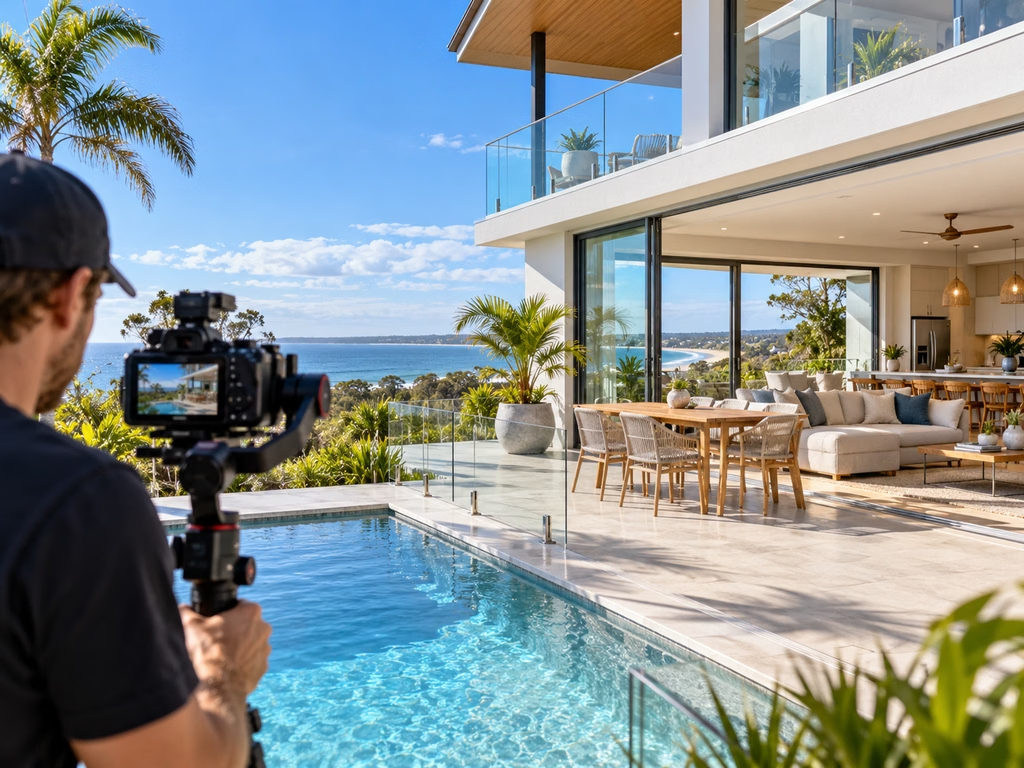
Professional photography will still remain important, but video could become an even bigger part of property marketing.
Rather than only scrolling through a photo gallery, buyers may increasingly expect short walkthroughs, vertical videos and lifestyle-focused clips that are easy to watch on a mobile device.
A short video can show movement through a home in a way photographs cannot.
It could highlight how the kitchen connects to the entertaining area, how large the backyard feels or how close the home is to the waterfront.
For Hervey Bay properties, video can also help showcase the lifestyle surrounding the home.
Beaches, the Esplanade, cafés, parks and boating opportunities can all help buyers understand what living in the area could feel like.
Property Marketing May Use More 3D Tours
Virtual tours have already become useful in real estate, but they may become more common by 2027.
Interactive tours allow buyers to explore rooms, understand layouts and move through a property online before deciding whether to inspect it in person.
This could be especially useful for interstate buyers considering a move to Hervey Bay.
A 3D tour may help buyers answer practical questions before they make an enquiry.
How does the kitchen connect to the living area?
Where are the bedrooms positioned?
How much separation is there between living spaces?
Providing this information earlier may help buyers decide which properties best suit their needs.
Property Marketing Could Use More AI
Artificial intelligence could become one of the biggest influences on future property marketing.
Traditional property searches usually rely on filters such as suburb, price, bedrooms and property type.
In the future, buyers may be able to search in a more conversational way.
For example:
A low-maintenance home near the Hervey Bay Esplanade with room for a caravan and outdoor entertaining.
Search technology could then help identify properties that match those priorities.
This may make detailed property descriptions increasingly valuable.
Instead of simply listing the number of bedrooms and bathrooms, property marketing may need to explain how a home actually suits different lifestyles.
Property Marketing Could Become More Personalised

Not every buyer values the same feature.
One person may immediately notice the swimming pool.
Another may prioritise side access.
Someone else may care most about a renovated kitchen, larger backyard or proximity to the beach.
Future property marketing could become more personalised around these different priorities.
A single home may be presented differently depending on where the buyer discovers it.
A social media post could focus on lifestyle.
A property portal could focus on practical details.
A video could showcase the flow of the home.
The full listing could provide more detailed information.
Instead of one advertisement trying to do everything, a campaign may use several pieces of content working together.
Social Media Could Shape Property Marketing
Social media is already an important part of real estate promotion, but it could become even more influential.
A buyer may first discover a property while scrolling through Facebook or Instagram before they actively search for it on a property website.
This gives property marketing the opportunity to reach buyers earlier in their decision-making process.
Short videos, property highlights, lifestyle clips and local area content can all help create interest.
Rather than repeating the same advertisement everywhere, campaigns may increasingly be adapted to suit each platform.
That can make property marketing feel more natural and relevant to the people seeing it.
Property Marketing Could Give Buyers More Information
The future of property marketing may not simply be about making homes look impressive. https://cartercooperrealty.com.au/residential/
It may also be about giving buyers greater clarity.
Buyers often spend considerable time researching a property before contacting an agent.
By 2027, they may expect listings to answer more questions from the beginning.
Floorplans, detailed photography, video, measurements, location information and clear descriptions could all become increasingly important.
The challenge will be presenting enough information without overwhelming people.
A strong campaign should make buyers curious while still giving them the detail they need to decide whether the home may suit them.
Lifestyle Could Lead Property Marketing

Real estate has never only been about walls, floors and roofs.
People buy homes because of what those homes allow them to do.
That could become an even bigger part of property marketing in 2027.
Rather than simply promoting a covered patio, marketing could show how the space connects to the kitchen and creates an entertaining area.
Instead of only mentioning side access, the campaign could explain how the space may suit a boat, caravan or trailer.
Rather than just stating that a home is close to the beach, marketing can explain what that location could mean for someone’s everyday routine.
This is particularly relevant in Hervey Bay.
For many buyers, moving here is connected to a lifestyle decision.
Showing that lifestyle can help buyers understand why a property may suit them.
Authentic Property Marketing Could Matter More
As digital tools become more advanced, authenticity may become even more important.
Buyers still need an accurate understanding of the home they are considering.
Marketing that creates unrealistic expectations can quickly become disappointing when someone attends an inspection.
Professional presentation should highlight the property’s genuine strengths rather than make the home appear completely different from reality.
This may become especially important as artificial intelligence and editing tools become more capable.
Strong property marketing should make a home look its best while still representing it honestly.https://kimcarterrealestateherveybay.com.au/
Property Marketing Could Become Mobile First
A large amount of property browsing already happens on mobile devices.
By 2027, property marketing may become even more focused on smaller screens.
This could influence photography, video and even the way listing descriptions are written.
Images need to capture attention quickly.
Headlines need to be easy to understand.
Video may increasingly be vertical.
Important features may need to appear early rather than being buried at the end of a lengthy advertisement.
This does not necessarily mean listings need to become shorter.
Instead, the information may simply need to be organised more clearly.
Strong Photography Will Still Support Property Marketing
With so much discussion around AI, video and virtual tours, it would be easy to assume photography may become less important.
That is unlikely.
Professional photography remains one of the quickest ways for buyers to form an initial impression of a property.
The difference may be that photographs become one part of a larger property marketing campaign.
Photography can capture attention.
Video can create movement and emotion.
Floorplans can explain the layout.
Virtual tours can allow buyers to explore.
The property description can bring everything together.
Each element can serve a different purpose.
Local Knowledge Will Strengthen Property Marketing
As technology becomes more capable, local knowledge may actually become more valuable.
Technology can provide information, but property decisions are also influenced by context.
Two homes with similar features can attract very different buyers depending on their position, suburb, surrounding neighbourhood and presentation.
Understanding Hervey Bay’s different areas can therefore remain an important part of property marketing.
A home in Urangan may need to be presented differently from one in Nikenbah, Kawungan or Scarness.
Good marketing should recognise those differences rather than using the same approach for every property.
Property Marketing Could Become More Interactive
The traditional property advertisement is relatively straightforward.
Buyers look through photos, read the description, check the floorplan and contact the agent.
By 2027, property marketing could become much more interactive.
Buyers may explore rooms virtually, watch short videos, compare spaces, inspect floorplans and search for homes using increasingly detailed preferences.
The property advertisement could become less like a static page and more like a complete digital experience.
However, the goal will remain the same.
Help the right buyers discover the property, understand its value and feel confident enough to take the next step.
What Could Property Marketing Look Like in 2027?
The biggest change may not be one particular technology.
Instead, it could be the way different forms of property marketing work together.
Photography, video, social media, AI-assisted search, floorplans and immersive property experiences could increasingly form one complete campaign.
At the same time, the fundamentals of real estate marketing are unlikely to disappear.
A property still needs to be presented well.
Its strongest features still need to be identified.
The right buyers still need to be reached.
Most importantly, the marketing still needs to give people a reason to imagine themselves living there.
Technology may change the tools, but successful property marketing will continue to depend on understanding the property, understanding the buyer and knowing how to connect the two.
In 2027, the most effective property marketing may not simply show buyers a home — it could help them experience the lifestyle before they ever walk through the front door.
At Carter Cooper Realty, we understand that every property is different. Creating a campaign that highlights the right features, lifestyle and location can help your home stand out to buyers searching across Hervey Bay and beyond.